Laundered Luck or How Lottery Tickets Became a Tool for Tax Fraud and Dirty Money
A decade-long investigation reveals how lottery tickets are being used as tools for tax evasion and money laundering. In cases like the Massachusetts scandal, thousands of real winning tickets were sold under the table to avoid taxes and public scrutiny. The buyers then claimed the prizes, filed fake gambling losses, and walked away clean. With little oversight, weak ID checks, and exploitable tax loopholes, a growing shadow economy threatens to undermine public trust in the lottery system itself.
A Game Built on Trust—But for Whom?
The lottery is supposed to be simple. You buy a ticket, pick your numbers, and wait for the draw. For most, it’s a moment of hope. But behind the scenes, the lottery system has become a quiet avenue for tax evasion, financial manipulation, and even organized crime.
Over the last decade, a hidden economy has flourished—one where real winning tickets are sold for cash, then used to launder money or dodge taxes. This is not about fake jackpots or stolen tickets. This is about loopholes—legal and systemic—that allow everyday people and criminal networks to exploit a game designed to fund public programs and deliver dreams.
The Massachusetts Scandal: 14,000 Tickets and a Decade of Fraud
One of the most documented examples of this underground system unfolded in Massachusetts, where Ali Jaafar and his sons Yousef and Mohamed cashed over 14,000 winning tickets from 2011 to 2020. The scheme netted them more than $20 million in winnings, and they fraudulently claimed $6 million in tax refunds by reporting fake gambling losses.
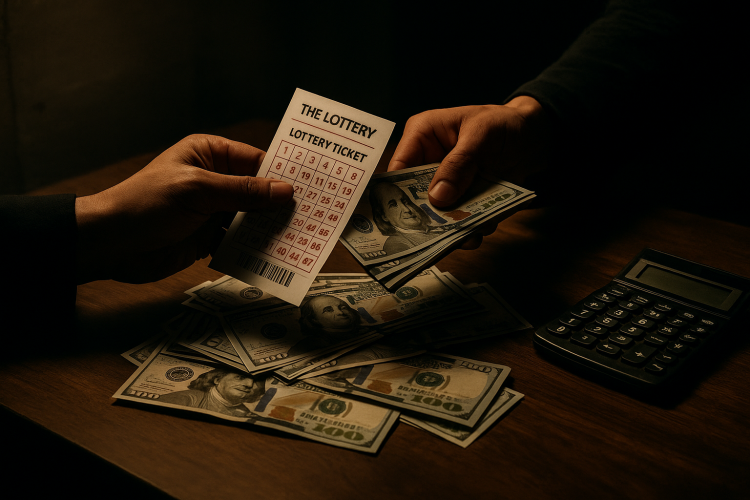
Their method was straightforward. They purchased winning tickets from real winners—many of whom wanted to avoid child support deductions, welfare impact, or immigration-related scrutiny. These players got fast, off-the-books cash. The Jaafars, in return, claimed the winnings under their names and filed tax returns offset by invented casino losses.
This wasn’t just unethical—it was criminal. When the IRS and Department of Justice finally intervened, the family was convicted of conspiracy to defraud the United States and money laundering. But the underlying method—buying signed winning tickets—is still not illegal in many U.S. states.
The Rise of the “Ten‑Percenters”
The Jaafars weren’t alone. Across the country, “ten-percenters” have built small-scale empires on similar schemes. These are individuals or groups who purchase lottery tickets from desperate or financially cautious winners, often paying 70 to 90 cents on the dollar.
The tickets are then redeemed by the buyers, who either keep the money clean or disguise it as legitimate income for tax purposes. In return, they sometimes file exaggerated gambling losses on their tax returns to reduce their liability. This has been happening quietly for decades.
Investigations in New York, Florida, and Ohio have all revealed “frequent winners” who cash in dozens—sometimes hundreds—of tickets per year, far beyond what statistics would suggest is possible through fair play.
Why People Sell Their Winning Tickets
There are several reasons why someone might sell a legitimate winning ticket instead of claiming it:
- Child support arrears: In many states, lottery agencies are required to deduct overdue child support before issuing a payout.
- Tax liens or public assistance: Claiming a win could reduce benefits or trigger audits.
- Immigration concerns: Undocumented individuals may be afraid to provide identification.
- Criminal history: Some winners want to avoid law enforcement attention.
- Bankruptcy or divorce: Hiding assets during sensitive legal proceedings is common.
In most of these cases, the seller prioritizes privacy or short-term cash flow. But by doing so, they create a shadow system that erodes the integrity of the game.
The Loophole in the Tax Code
The U.S. tax system allows lottery winners to deduct gambling losses up to the amount of their winnings—but requires “proof.” That proof is often a vague paper trail: casino logs, betting slips, or self-reported losses.
This opens the door for manipulation. Many of the people buying winning tickets simply invent gambling losses to offset their new “income.” Because these claims are hard to verify—and rarely audited by the IRS—this type of fraud can continue for years without consequence.
Even when the IRS becomes suspicious, proving the original fraud is difficult without a whistleblower or digital trail. And if the sums are under six figures, enforcement often isn’t prioritized.
Organized Crime and Global Abuse
Beyond local fraud, organized crime groups have long used the lottery to launder money. In Colombia, criminal networks used forged lottery claims to clean cartel cash. In Canada, retailers were caught filing false claims after manipulating ticket scanners. In the U.K., insider fraud cases involving ticket tampering and false identities made headlines.
The appeal is simple. A winning lottery ticket—especially a scratch-off or low-tier prize—is like cash. Once it’s signed and presented, most lotteries have limited means of verifying who originally purchased it. This makes it a perfect vehicle for moving money under the radar.
Where Oversight Fails
Many lotteries rely on basic ID checks and winner forms to validate claims. But few actively audit frequent claimants unless prompted by an external agency.
Tax authorities also struggle to flag patterns unless gambling loss deductions become egregious. Even then, they often lack the resources to investigate every claim. In some cases, investigations only begin when journalists or internal auditors raise red flags.
There is no national database of frequent winners, and most states do not share data. As a result, someone operating in multiple states can continue laundering money through the lottery without ever triggering a compliance review.
The Real Cost: Public Trust and Lost Revenue
These schemes may appear victimless, but the cost is significant. State lotteries lose credibility. Governments lose tax revenue. And honest players begin to doubt the legitimacy of the system.
When people hear that one man claimed 14,000 winning tickets or that dozens of retailers filed false wins, it undermines public faith. It also changes the perception of what it means to be “lucky.” If winning the lottery no longer reflects luck but loopholes, it damages the brand of every draw.
Moreover, every fake loss claimed on a tax return is money not going into public schools, infrastructure, or health programs—ironically, the very causes lotteries were designed to support.
Luck or Laundering?
The lottery system is built on trust. Players trust that the games are fair, that their chances—however small—are real, and that their prizes will be honored. But when real winnings become tools for tax evasion, money laundering, and fraud, that trust begins to unravel.
What happened in Massachusetts wasn’t just a scandal—it was a wake-up call. As long as signed tickets can be resold and as long as the IRS doesn’t catch fraudulent gambling losses, these schemes will continue. They won’t make headlines every day. But they’ll happen—in the background, just beyond the draw.
And the people profiting won’t need luck at all.

You May Like: